Cruz Bay Visitor Center
18.3328, -64.7937 · Park boundary: National Park Service
Take the scenic way to Cruz Bay Visitor Center.
Byway plans around your taste, verified places, real weather and opening hours — then opens every leg in Google Maps with one tap.
Visitor and Information Center for Virgin Islands National Park and Virgin Islands Coral Reef National Monument.
- Mon–Thu
- 8:15AM - 4:00PM
- Fri
- 8:15AM - 1:30PM
- Sat–Sun
- Closed
Visitor Center and Store
- Closed on July 4th · Jul 4, 2027 – Jul 4, 2027
- Closed on Thanksgiving · Nov 26, 2026 – Nov 26, 2026
- Closed on Christmas · Dec 25, 2026 – Dec 25, 2026
- New Year's Day · Jan 1, 2027 – Jan 1, 2027 · Closed
- Martin Luther King's Birthday · Jan 18, 2027 – Jan 18, 2027 · Closed
NPS classic stamp with circle, with park name and date
The Visitor Center is just a short, five minute walk (approximately two blocks) from the public ferry dock. Head north north on route 20.
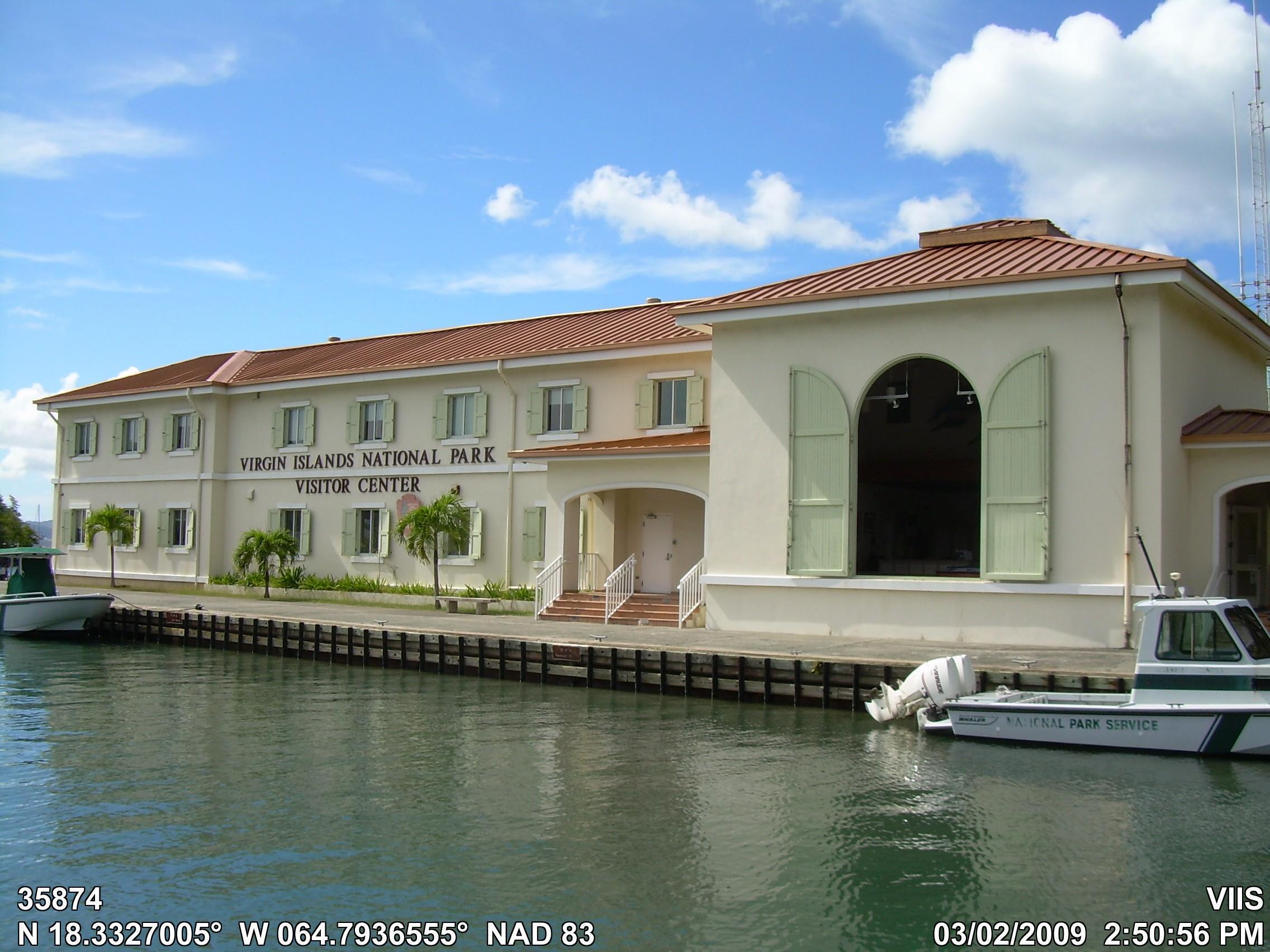
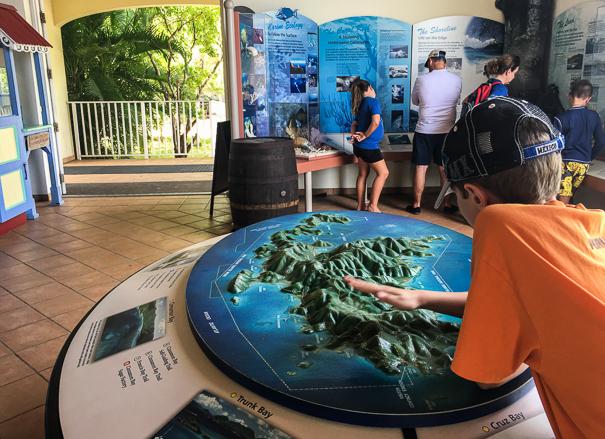
The Cruz Bay Visitors Center is in the town of Cruz Bay adjacent to the National Park’s Finger Pier and the Cruz Bay public baseball field. The driveway to the Visitors Center is at the beginning of the North Shore Road, Route 20. There are numerous spots for visitors to park outside the building. Also located in the area near the parking lot are the men’s and women’s rest room. You can enter the building by using a ramp, or two staircases located on either side of the ramp. The building was deigned to look like an old Danish West Indian warehouse with large shuttered windows designed to replicate the carriage doors of tan old warehouses. It is light yellow in color. The shutters are dark green. There are several interpretive exhibits in the building. The first is titled Changing Paradise and brings attention to the constant changes that happen on the island--both natural changes and changes by the movement of different groups of people throughout the Caribbean. Across from the first panel is the entrance to the gift shop managed by the Friends of Virgin Islands National Park. You can find park souvenirs like t-shirts, patches, stickers, books, post cards and magnets in the gift shop. As you continue to the second panel titled Marine Ecology you will find information on the life below the surface in the waters that surround the park. There is also a display case with examples of coral and a diorama of a coral reef . The next panel called The Shoreline has photographs of the plants and animals that live in-between the land and the sea. There are photographs of crabs, shore birds, nesting sea turtles and coastal vegetation. Separated by a replica of a tall Kapok tree the next panel titled The Land has photographs of different terrestrial habitats and the creatures that can be found there. You will see photographs of bats, frogs and lizards. In between The Land panel and the next panel titled The First People there is a glass display case with some replicas of artifacts from the early inhabitants of the Virgin Islands, the Taino’s. Ceramics and stone axes can be seen inside the case. Across from this panel in the middle of the room there is a topographical model of the island of St John. It shows the boundary of the park as well as the roads, beaches and park trails. The large shuttered windows separate the First People panel with the next exhibit panel titled Colonial St. John. This panel focuses on the plantation system and the layers of change that occurred on St. John. There are sketches of windmills, great houses and enslaved Africans working in the sugar cane fields. Another display case separates the Colonial St. John panel from the Africans panel. This case has replicas from the plantation days like cane knifes and ceramic plates. The Africans panel tells the story of the horrible conditions of the human cargo aboard slave ships and the rising up, the slave revolt, that took place in 1733. There are sketches of enslaved Africans working in the cane fields and there is a Conch Shell hanging over the panel which is a symbol for Freedom in the Caribbean. There is another display case with crafts that were made by Virgin Islanders after emancipation. Skilled craftsmen and women made items like fish traps and baskets, necessary to survival. The last exhibit panel titled Our Environmental Heritage pays tribute to the people who remained on the island after the plantation economy came to an end. There are photographs of former cultural demonstrators who shared their skills with park visitors over the years. Where the displays end you will find yourself across from the front desk of the Visitors Center where you can talk with staff, pick up brochures and make purchases from the gift shop. At the end of the desk there is a water filling station.

Location, hours, and facility details confirmed against the National Park Service registry.
National Park Service registryChecked 2026-08-04
Where is Cruz Bay Visitor Center?
Cruz Bay Visitor Center in Virgin Islands National Park is at 1300 Cruz Bay Creek, St. John, VI.
What services does Cruz Bay Visitor Center offer?
Cruz Bay Visitor Center in Virgin Islands National Park lists beach/water access, benches/seating, cellular signal, dock/pier, fire extinguisher, first aid kit available, food/drink - snacks, gifts/souvenirs/books, historical/interpretive information/exhibits, information, information - maps available, information - ranger/staff member present, information kiosk/bulletin board, internet/wifi available, parking - auto, permits issued, picnic shelter/pavilion, picnic table, playground, restroom, restroom - accessible, toilet - flush, trailhead, trash/litter receptacles, water - bottle-filling station, water - drinking/potable, wheelchair accessible.
Is there a passport stamp at Cruz Bay Visitor Center?
Yes. Cruz Bay Visitor Center in Virgin Islands National Park is a National Park Passport stamp location. NPS classic stamp with circle, with park name and date
What is the phone number for Cruz Bay Visitor Center?
Cruz Bay Visitor Center in Virgin Islands National Park can be reached on 3407766201.
Drive to Cruz Bay Visitor Center
Byway plans the scenic way in — real places, real weather, every stop verified. Zero hallucinations. Google Maps for turns. Byway for soul.