Arches National Park

Official park boundary · National Park Service
Take the scenic way to Arches National Park.
Byway plans around your taste, verified places, real weather and opening hours — then opens every leg in Google Maps with one tap.
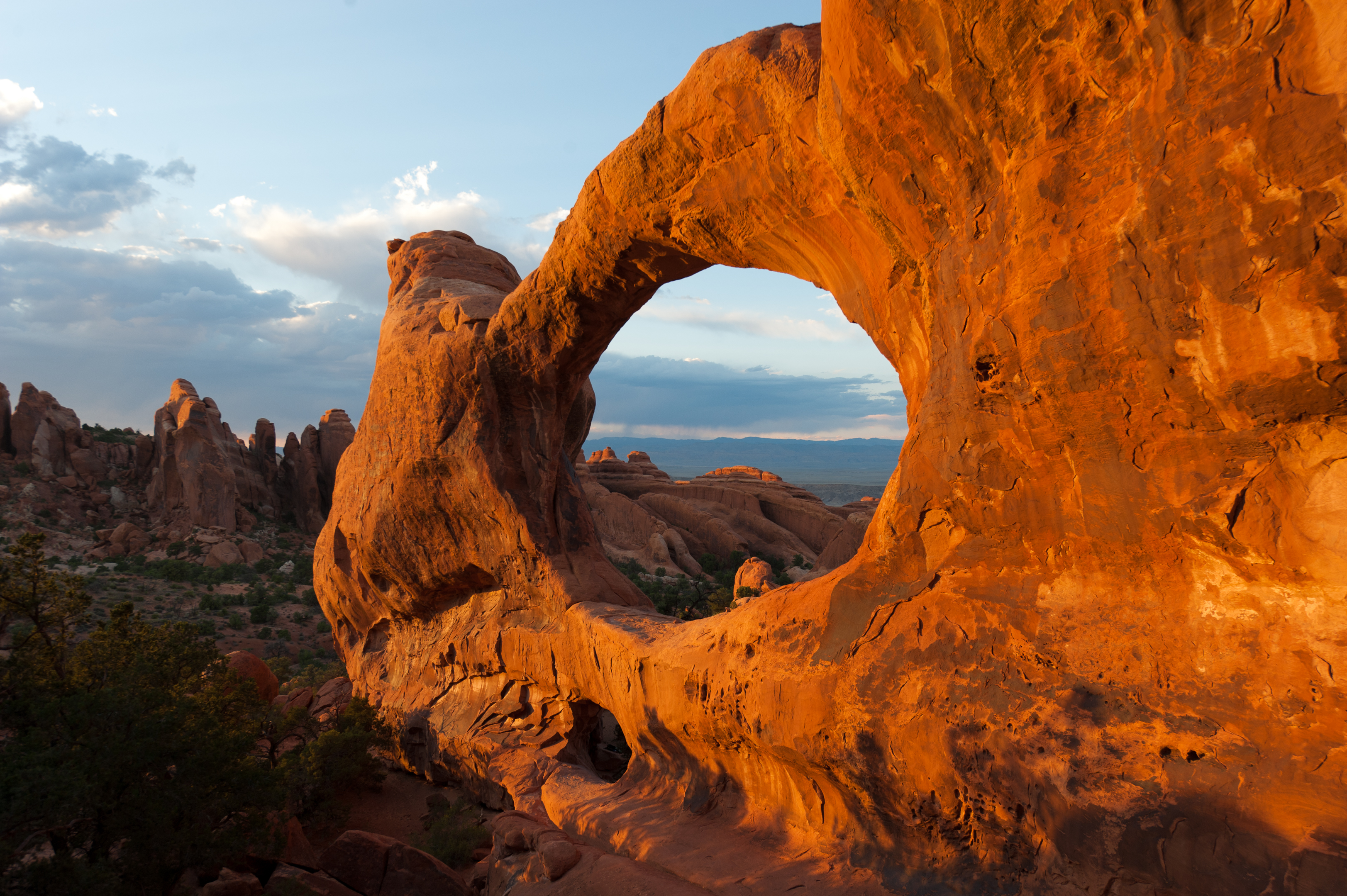
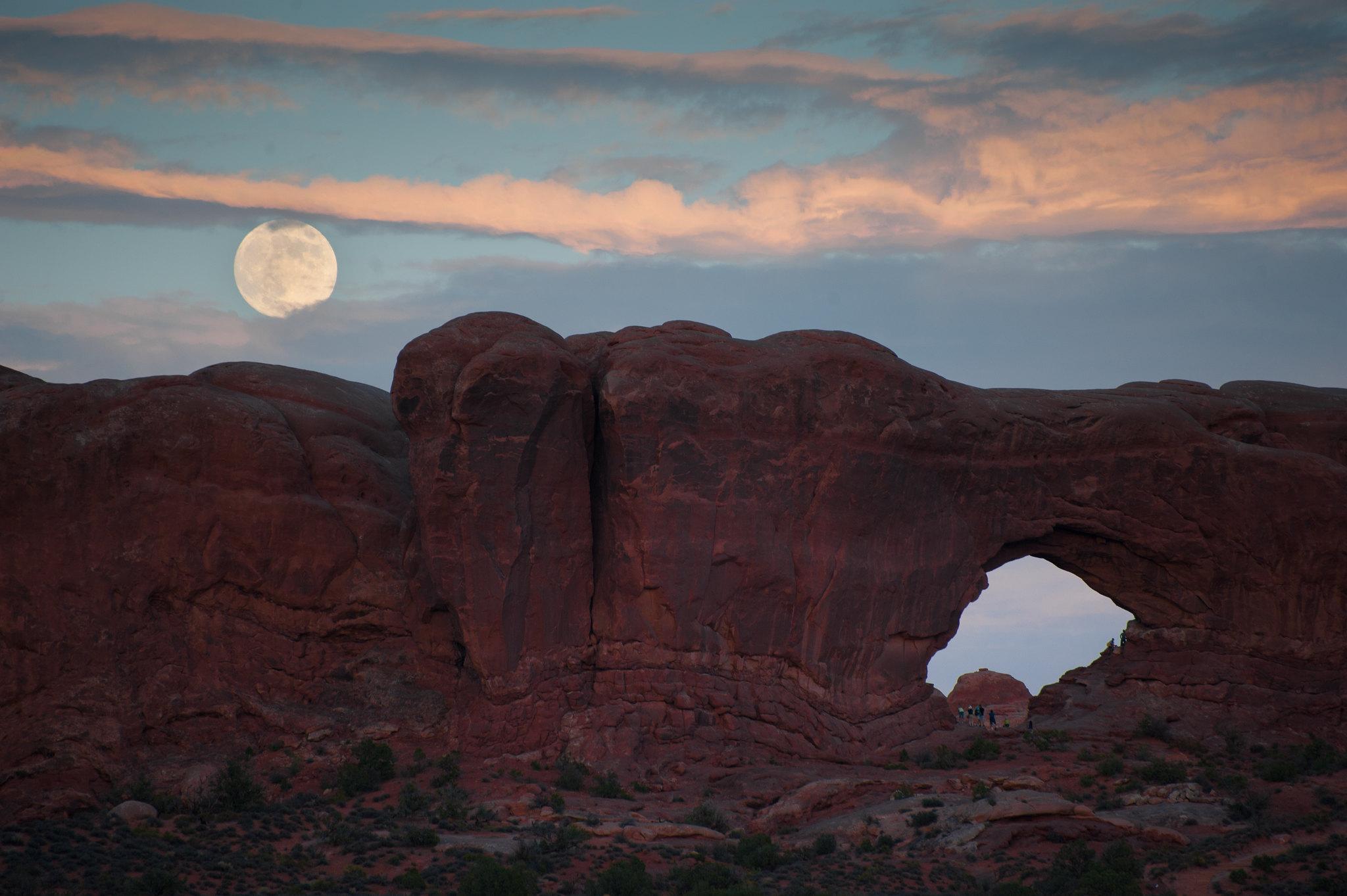
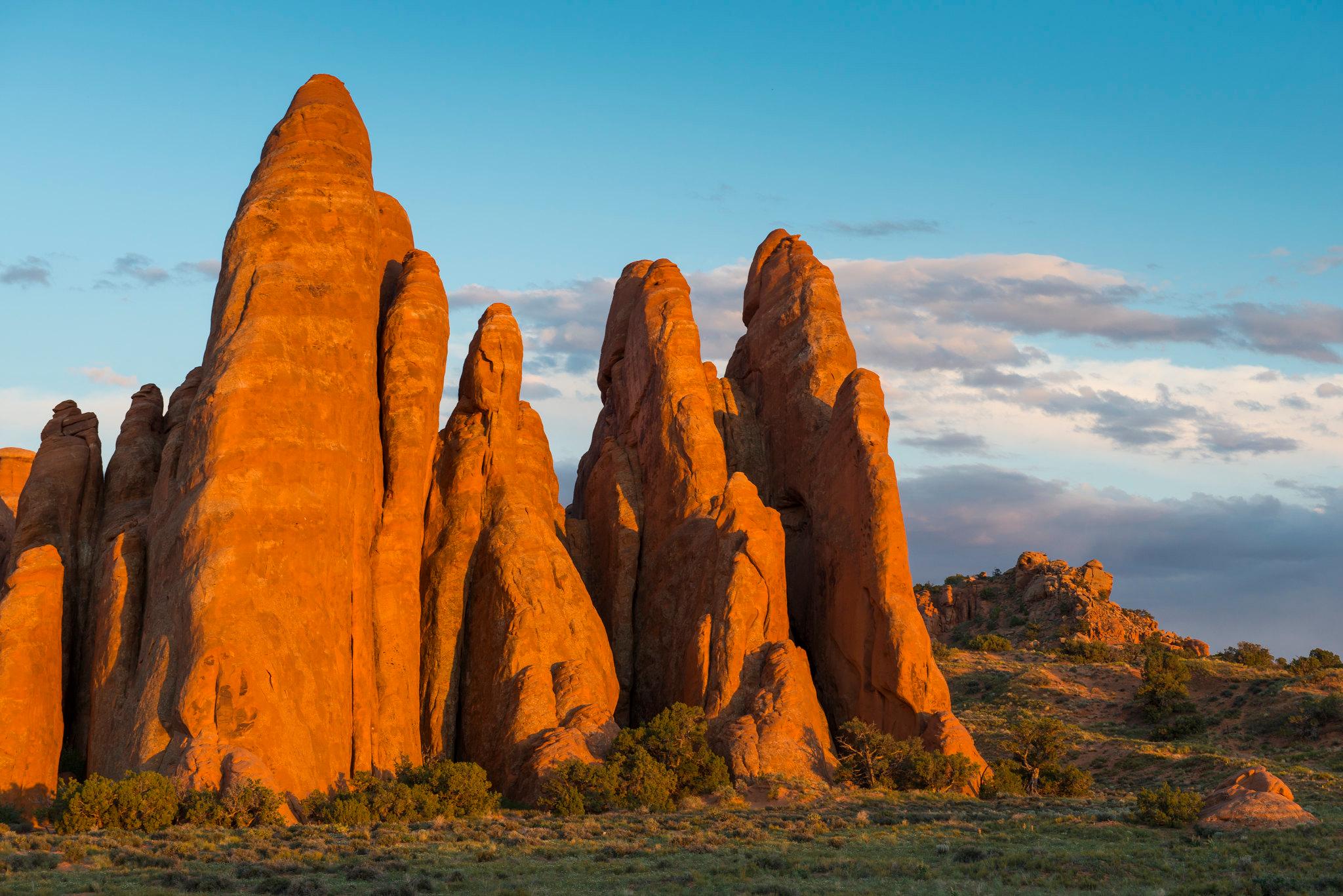
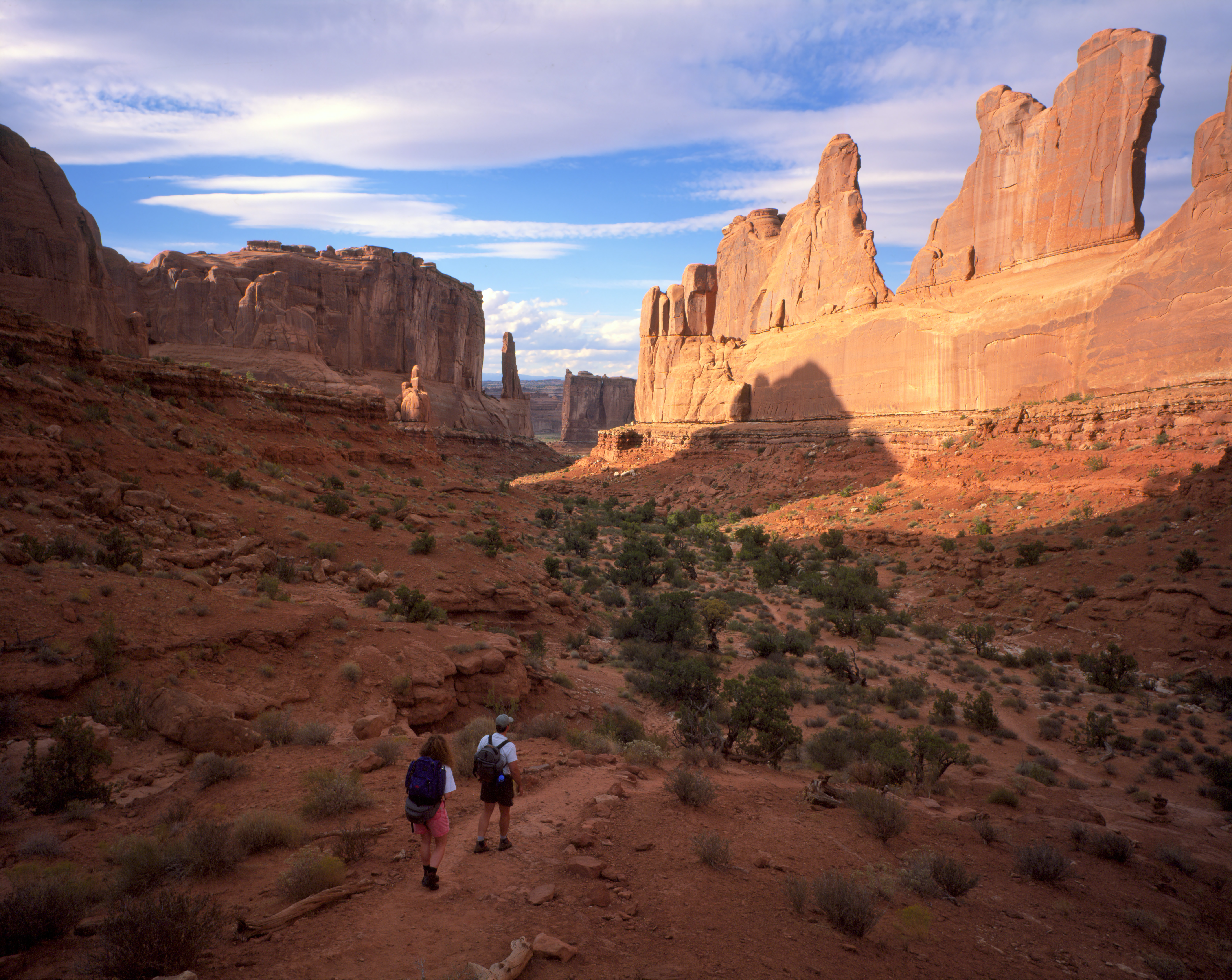
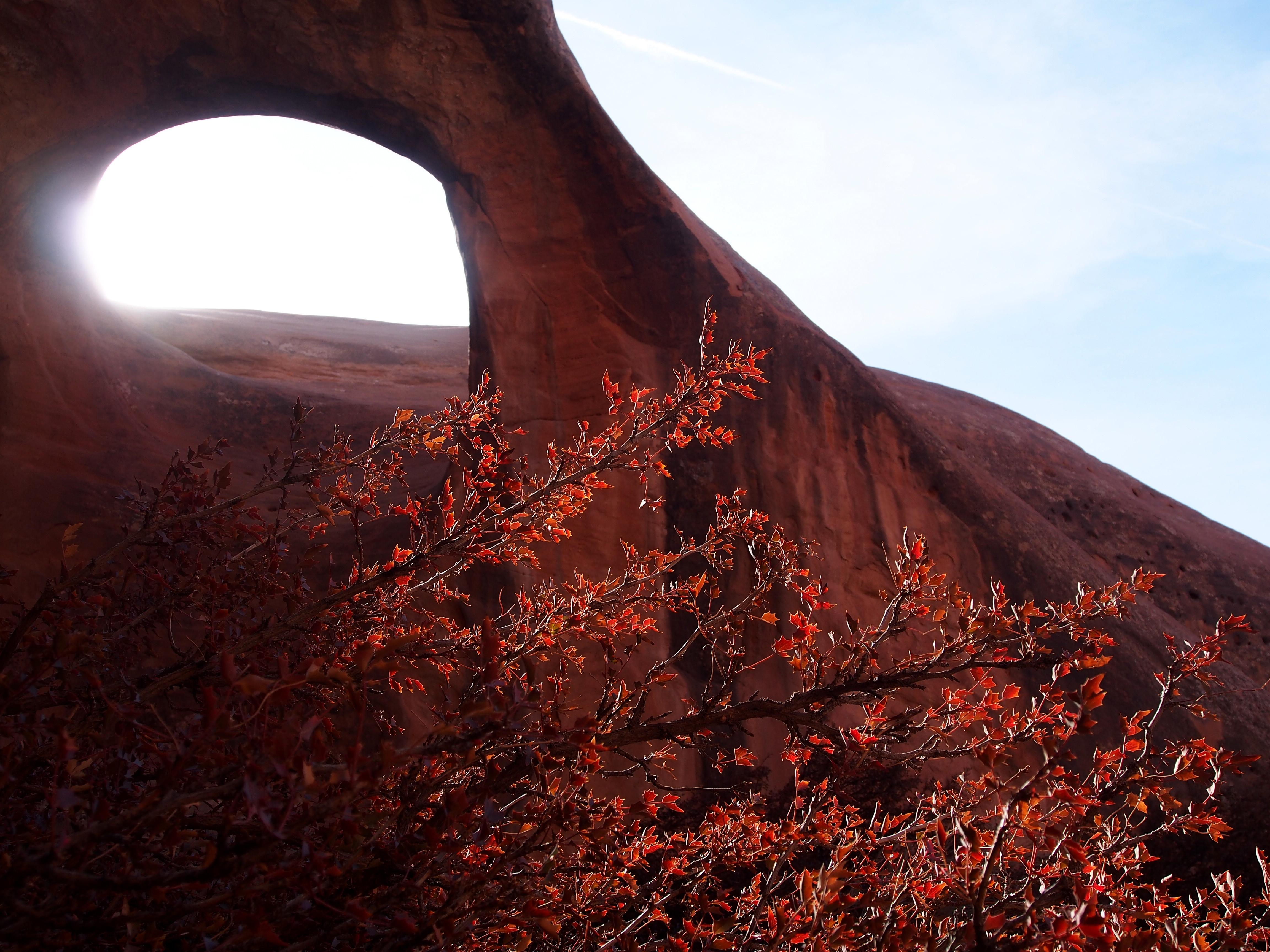
Discover a landscape of contrasting colors, land forms, and textures unlike any other. The park has over 2,000 natural stone arches, hundreds of soaring pinnacles, massive rock fins, and giant balanced rocks. This red-rock wonderland will amaze you with its formations, refresh you with its trails, and inspire you with its sunsets.
Arches National Park is a national park of the United States in eastern Utah. The park is adjacent to the Colorado River, 4 mi (6 km) north of Moab, Utah. The park contains more than 2,000 natural sandstone arches, including the well-known Delicate Arch, which constitute the highest density of natural arches in the world. It also contains a variety of other unique geological resources and formations. The national park lies above an underground evaporite layer or salt bed, which is the main cause of the formation of the arches, spires, balanced rocks, sandstone fins, and eroded monoliths in the area.
Arches National Park is located in southeast Utah, five miles north of Moab on US 191. From Moab, Utah, drive five miles north on Main Street/US 191. Turn right at the stoplight. From Interstate 70, take exit 182 (Crescent Junction), then drive south 28 miles on US 191. Turn left at the stoplight.
Arches is part of the Colorado Plateau, a "high desert" region that experiences wide temperature fluctuations, sometimes over 40 degrees in a single day. The temperate (and most popular) seasons are spring (April-May) and fall (mid-September-October), when daytime highs average 60 to 80 F and lows average 30 to 50 F. Summer temperatures often exceed 100 F, making strenuous exercise difficult. Winters are cold, with highs averaging 30 to 50 F, and lows averaging 0 to 20 F.
Source: National Park Service
Admits one private, non-commercial vehicle (15 passenger capacity or less) and all its occupants.
Valid for 7 days. Admits up to 2 private, non-commercial motorcycles with up to 4 total passengers.
Admits one individual with no car. Typically used for bicyclists, hikers, and pedestrians. Youth 15 and under are admitted free.
Park facts, fees, and activities confirmed against the National Park Service registry.
National Park Service registryChecked 2026-08-04
- Stargazing Events in Southeast Utah
Rangers occasionally lead stargazing programs and events at parks throughout southeast Utah. Learn about what to expect and check out a schedule of stargazing events at Arches and Canyonlands national parks and Hovenweep and Natural Bridges national monuments.
- Explore the Fiery Furnace
Entry to the Fiery Furnace is managed by permits and ranger-led tours to ensure the experience of solitude and wilderness.
- Canyoneering at Arches
Arches has no real "slot canyons" but does afford some unique on-rope opportunities.
- Rock Climbing at Arches
Most climbing routes in the park require advanced techniques. Climbing is not allowed on any arches or certain named features, such as Balanced Rock.
- Hiking at Arches
Arches contains a variety of hiking trails, from easy/moderate to long and strenuous. Many trails use cairns (stacks of rocks) for markers and cross broad rock surfaces, requiring attention to follow. Learn how to Protect Yourself and Protect Your Park with hiking safety and Leave No Trace tips.
- Stargaze at Panorama Point
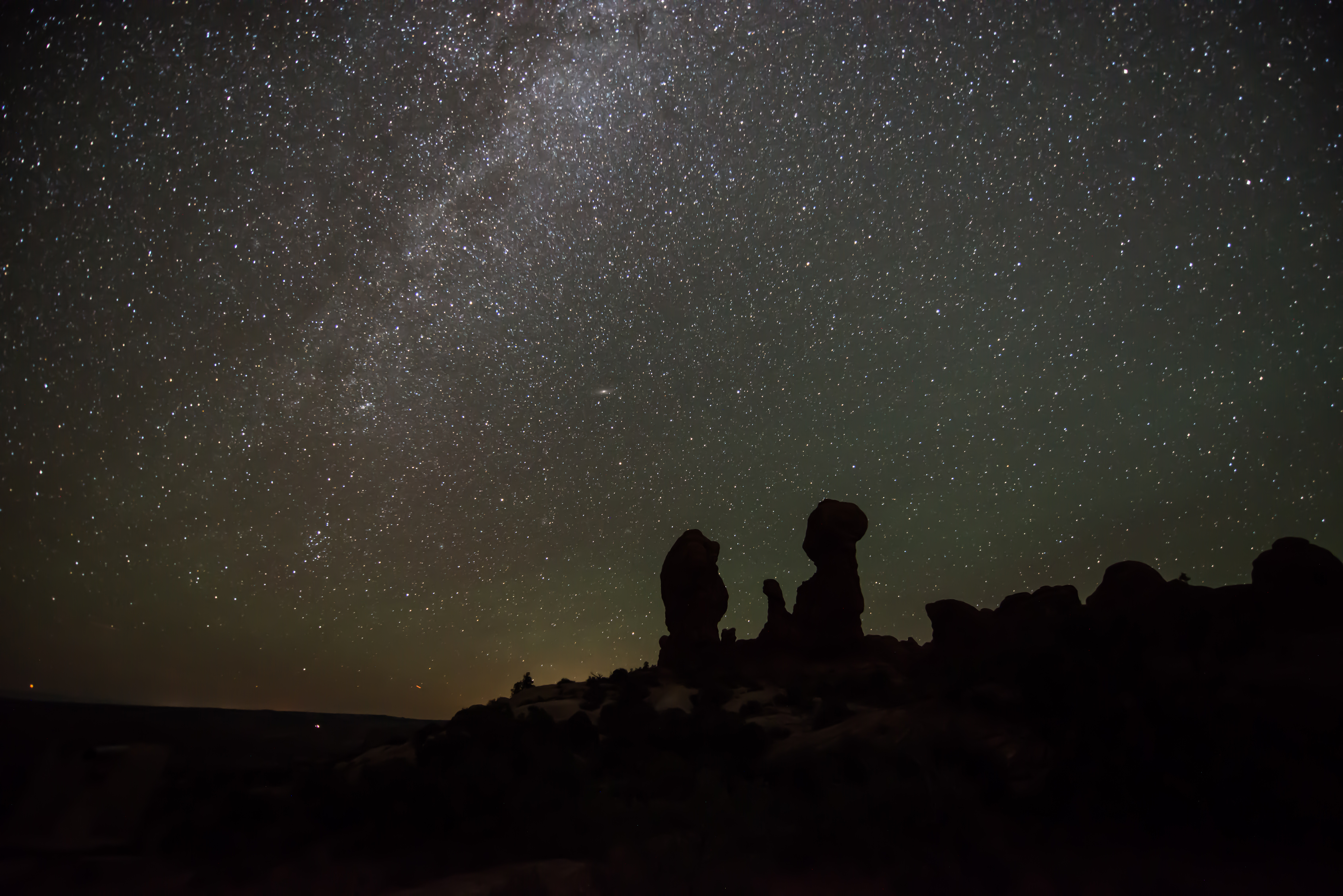
Arches National Park and the surrounding Colorado Plateau offer some of the darkest night skies remaining in the United States. You can enjoy the park after dark by viewing spectacular night skies.
- Start at Arches Visitor Center
Stop at the visitor center to plan your visit, fill your water bottle, learn about the park, and pick up a souvenir.
- Backpacking at Arches
Backpacking at Arches is allowed in designated sites only and requires a permit.
Source: National Park Service
Where is Arches National Park?
Arches National Park is in Utah.
When was Arches National Park established?
Arches National Park was established in 1971.
How big is Arches National Park?
Arches National Park covers 120 square miles (76,679 acres).
How much does it cost to enter Arches National Park?
Arches National Park charges $30 per private vehicle. Other rates apply to motorcycles, cyclists and walk-ins, and some parks add their own reservation or surcharge on top.
Can you camp in Arches National Park?
Yes. The National Park Service runs 1 campground in Arches National Park, with 51 campsites between them.
Does Arches National Park have a visitor center?
Yes. Arches National Park has 1 visitor center: Arches Visitor Center.
Day trips start here
- Arches National Park · 3 mi
Drive Arches with Byway
Byway plans the scenic day around Arches — real places, real weather, every stop verified. Zero hallucinations. Google Maps for turns. Byway for soul.